AI Bubble
Market Intelligence
A regime shift is here - whether you like it or not. Using traditional methods of analysing markets do not work anymore. We uncover the indicators that matter.
Loading economic data...
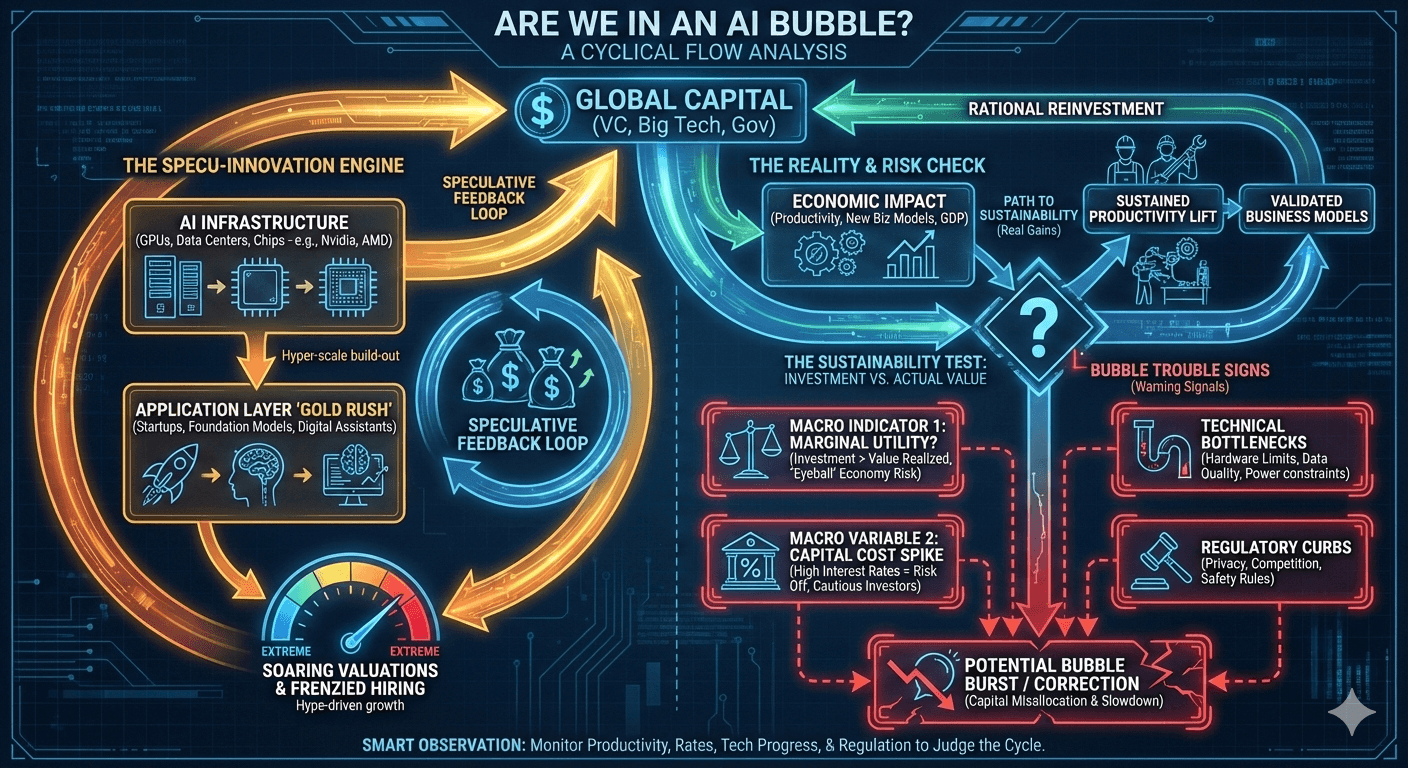
当前,大量资本正涌入人工智能领域,从巨额的数据中心投资和尖端半导体制造到应用层的“淘金热”,无所不包。随着某一领域升温,资本迅速流向下一个被认为有机会的赛道,这一切共同定义了人工智能领域中创新与投机的惊人速度。但当如此多的资金涌入这一领域时,我们有理由思考:我们是在经历一场 AI 泡沫吗?如果是的话——我们又该如何觉察泡沫破裂的前兆? 泡沫一词用来描述市场周期,其中资产价格因投机热情高涨而大幅上涨,却忽视了基本面。我们曾在 1990 年代末的互联网泡沫和 2000 年代的房地产泡沫中见证过这一情景。在这些周期中,充裕的资本涌入高速增长的市场,推动估值远远超出可持续水平。今天,AI 已成为“吸金石”,全球科技巨头、风投机构和各国政府争相加码,创下投资新高. 但历史经验表明,如果热情得不到理性约束,往往会导致投资过度和资本错配。那么,哪些信号可能预示着 AI 泡沫的到来?我们又该如何判断泡沫终结

More Stories
Honestly - are we in an AI bubble?
Lots of capital are pouring into AI right now - not only from data centres, to semiconductors, to the app layer. One by one, capital is flowing down this chain quickly. Will the money stop flowing? It is contributing to GDP figures massively. But how do we know when the music stops? What macro factors can we consider?


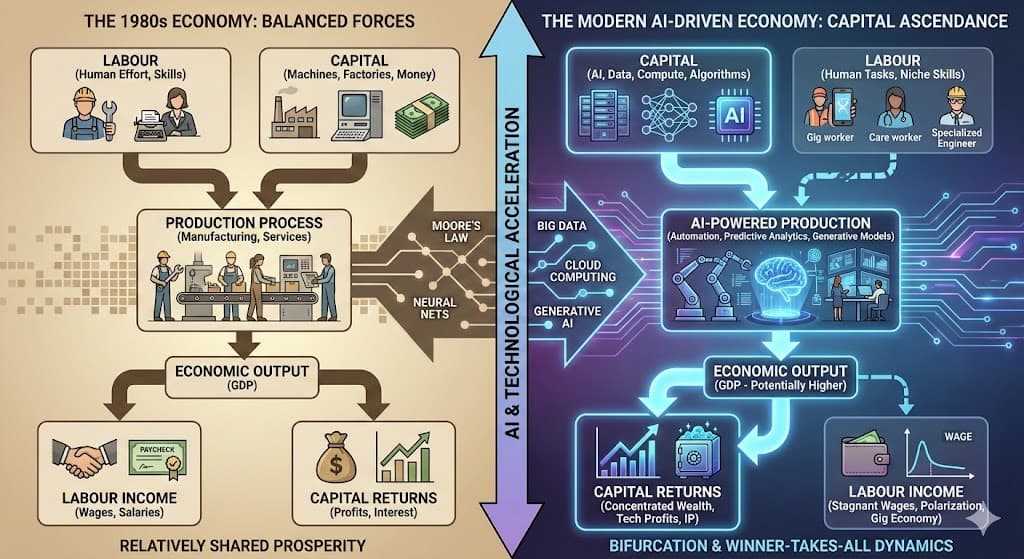
The bifurcated economy - how would a retail investor and a human being navigate AI?
In the age of artificial intelligence, economic growth and opportunity are increasingly concentrated among those with access to advanced technology and data, giving rise to what some call a "bifurcated economy." This essay explores how the divide between AI-powered and traditional sectors shapes the lives and strategies of ordinary people, particularly retail investors and working individuals. Far from dystopian or utopian extremes, the realities of the new AI-driven age demand a nuanced examination of both risk and possibility, and honest reflection on how humans can adapt, invest, and thrive in a world shaped by algorithms.